Cricket Dismissals Explained: Every Way a Batter Can Be Out
A beginner's guide to the ways of getting out in cricket: the common and rare dismissals in the Laws, which ones count for the bowler and what a no-ball changes.
Bitdeposit · 23 November 2026 · 8 min read
On this page
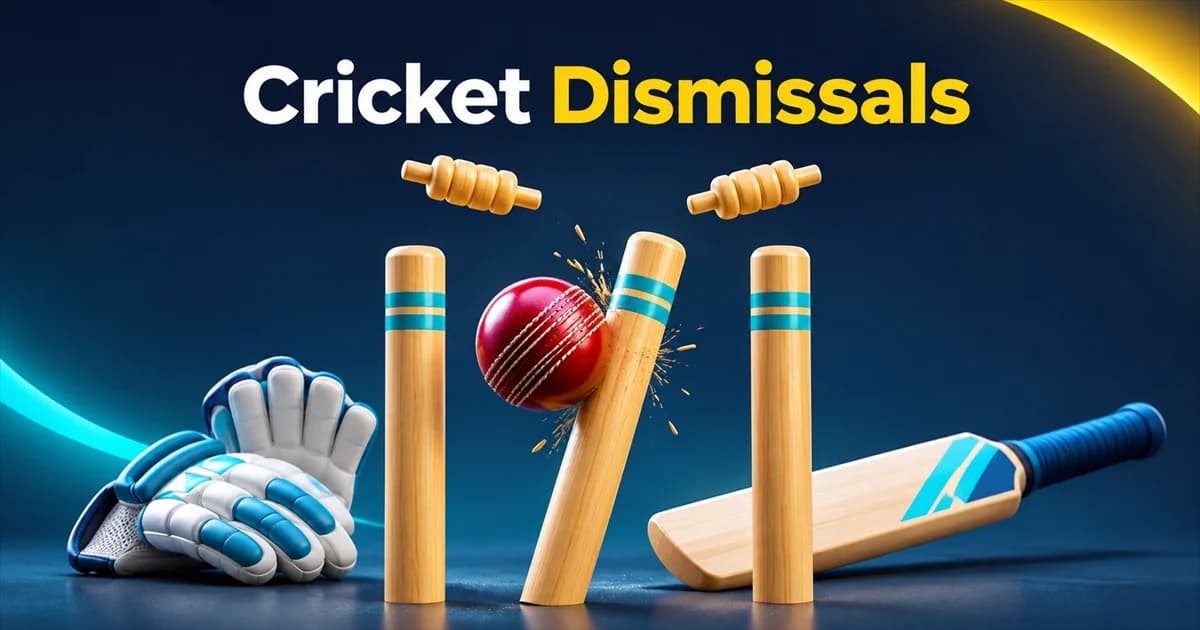
The ways of getting out in cricket are set by the Laws of Cricket, which list nine methods of dismissal: bowled, caught, hit the ball twice, hit wicket, leg before wicket (LBW), obstructing the field, run out, stumped and timed out. A batter can also be retired out. This guide explains each method and how dismissals affect betting markets.
Key takeaways
- The Laws of Cricket list nine methods of dismissal, and "retired out" is also recorded as a dismissal.
- The bowler gets credit for five methods: bowled, caught, LBW, stumped and hit wicket.
- Off a no-ball, a batter can be out only run out, obstructing the field or hit the ball twice.
What are the ways of getting out in cricket?
The ways of getting out in cricket are the nine methods of dismissal in the Laws of Cricket, published by Marylebone Cricket Club (MCC): bowled, caught, hit the ball twice, hit wicket, LBW, obstructing the field, run out, stumped and timed out.
A dismissal ends a batter's innings, and it is also called a wicket. A team of 11 is all out when 10 wickets have fallen, because the last batter has no partner. Older lists show 10 methods because "handled the ball" was counted separately. Since the 2017 code, a batter who wilfully handles the ball is out obstructing the field.
A batter who retires for a reason other than illness or injury, and does not resume, is recorded as "retired out". A batter who retires hurt is recorded as not out.
How does a dismissal work in cricket?
A dismissal works in three stages: an event happens on the field, the fielding side appeals, and the umpire decides. Under the Laws, an umpire does not give a batter out without an appeal.
A worked example shows how dismissals are recorded. A team is all out for 187. Its 10 wickets fall as 6 caught, 2 bowled, 1 LBW and 1 run out, and 6 + 2 + 1 + 1 = 10. Bowlers get credit for 9 of them, because a run out is not credited to the bowler.
Caught is the most common method in professional cricket. Bowled, LBW and run out make up most of the remainder.
What are the nine methods of dismissal?
The nine methods of dismissal differ in what must happen, whether the bowler gets credit and whether the method is possible off a no-ball. The table lists the nine methods in the Laws plus retired out.
| Method | What happens | Bowler gets credit? | Possible off a no-ball? |
|---|---|---|---|
| Bowled | The delivery breaks the wicket | Yes | No |
| Caught | A fielder catches the ball off the bat before it touches the ground | Yes | No |
| Leg before wicket (LBW) | The ball hits the batter's body and would have hit the wicket | Yes | No |
| Stumped | The wicket-keeper breaks the wicket with the striker out of the crease and not attempting a run | Yes | No |
| Hit wicket | The striker breaks the wicket with the bat or body | Yes | No |
| Run out | A fielder breaks the wicket while a batter is out of the crease and the ball is in play | No | Yes |
| Obstructing the field | A batter wilfully obstructs the fielding side, including handling the ball | No | Yes |
| Hit the ball twice | The striker wilfully hits the ball again, except to guard the wicket | No | Yes |
| Timed out | The incoming batter is not ready in time | No | Not applicable |
| Retired out | A batter retires without a valid reason and does not resume | No | Not applicable |
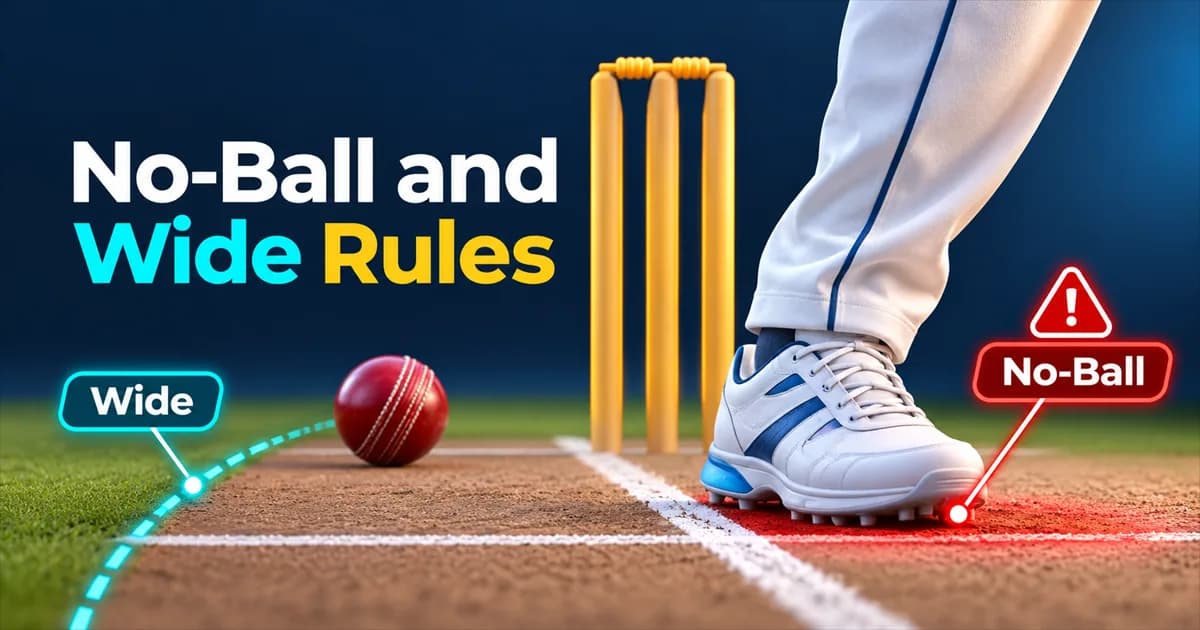
A no-ball protects the batter from the five methods credited to the bowler. A wide is different: off a wide, a batter can still be out stumped, hit wicket, run out or obstructing the field.
Under the Laws, the incoming batter must be ready within 3 minutes of the previous wicket. International Cricket Council (ICC) playing conditions use shorter limits in some formats: 2 minutes in One Day Internationals (ODIs) and 90 seconds in Twenty20 Internationals (T20Is). Sri Lanka's Angelo Mathews was timed out against Bangladesh at the 2023 Cricket World Cup, the first timed out dismissal in international cricket.
How do you work out how a batter was out?
A batter's method of dismissal is worked out by checking the delivery, what the ball hit and who broke the wicket. Follow these steps:
- Check whether the umpire signalled a no-ball, because only three methods are then possible.
- See whether the delivery broke the wicket, which is bowled.
- Watch whether a fielder caught the ball before it touched the ground, which is caught.
- Note who broke the wicket: the wicket-keeper with no run attempted is stumped, and a fielder during a run is run out.
- Read the scorecard entry, such as "c Fielder b Bowler" for caught or "lbw b Bowler" for LBW.
Dismissals also settle several betting markets. In a method of dismissal market, the bettor picks how the next wicket will fall, usually from caught, bowled, LBW, run out, stumped and "other". A stake of 100 on caught at odds of 1.60 returns 100 x 1.60 = 160 if the batter is caught.
A fall of next wicket market is an over/under bet on the team's score when the next wicket falls. If a team is 60/2 and the line is 85.5, a wicket at 92 settles as over and a wicket at 71 settles as under. Settlement of retired out and other rare cases varies by bookmaker.
Common mistakes to avoid
- Counting handled the ball as a separate method. It has been part of obstructing the field since the 2017 code.
- Crediting a run out to the bowler. A run out counts as a team wicket but does not appear in the bowler's figures.
- Thinking a batter can be caught off a no-ball. Only run out, obstructing the field and hit the ball twice apply.
Frequently asked questions
How many ways are there of getting out in cricket?
There are nine methods of dismissal in the Laws of Cricket: bowled, caught, hit the ball twice, hit wicket, LBW, obstructing the field, run out, stumped and timed out. Retired out is also recorded as a dismissal. Lists that show 10 methods include handled the ball, which was merged into obstructing the field in 2017.
Can a batter be out off a no-ball?
Yes, but only by three methods: run out, obstructing the field and hit the ball twice. A batter cannot be out bowled, caught, LBW, stumped or hit wicket off a no-ball. A free hit, which follows a no-ball in limited-overs cricket under ICC playing conditions, gives the same protection.
What is the difference between stumped and run out?
A batter is stumped when the wicket-keeper breaks the wicket with the striker out of the crease and not attempting a run. A batter is run out when any fielder breaks the wicket while a batter is out of the crease, usually during a run. Stumped is credited to the bowler and run out is not.
What does timed out mean in cricket?
Timed out means the incoming batter was not ready to play within the time allowed after the previous wicket. The Laws set 3 minutes. ICC playing conditions set 2 minutes in ODIs and 90 seconds in T20Is. The fielding side must appeal, and the wicket is not credited to any bowler.
Does a run out count as a wicket for the bowler?
No, a run out does not count as a wicket for the bowler. It adds to the team's wickets, and the scorecard names the fielders involved. Obstructing the field, timed out, hit the ball twice and retired out are also not credited to the bowler.
Play responsibly
Wickets are hard to predict, and markets on the next dismissal settle within a few balls, so in-play stakes can add up quickly. Set a budget before the match and do not chase a losing bet with another. Betting is for adults only, and the law differs by country. Support is available from GambleAware.
Summary
- The Laws of Cricket list nine methods of dismissal, and retired out is also recorded as a dismissal.
- The bowler gets credit for bowled, caught, LBW, stumped and hit wicket.
- Off a no-ball, only run out, obstructing the field and hit the ball twice are possible.
The full wording is in the MCC Laws of Cricket. The most complex method has its own guide in LBW rule explained, and illegal deliveries are covered in no-ball and wide rules in cricket. Wicket markets are covered in cricket betting markets explained.
18+ only. Play for fun, set your limits and take a break when it stops being fun.
Share this post