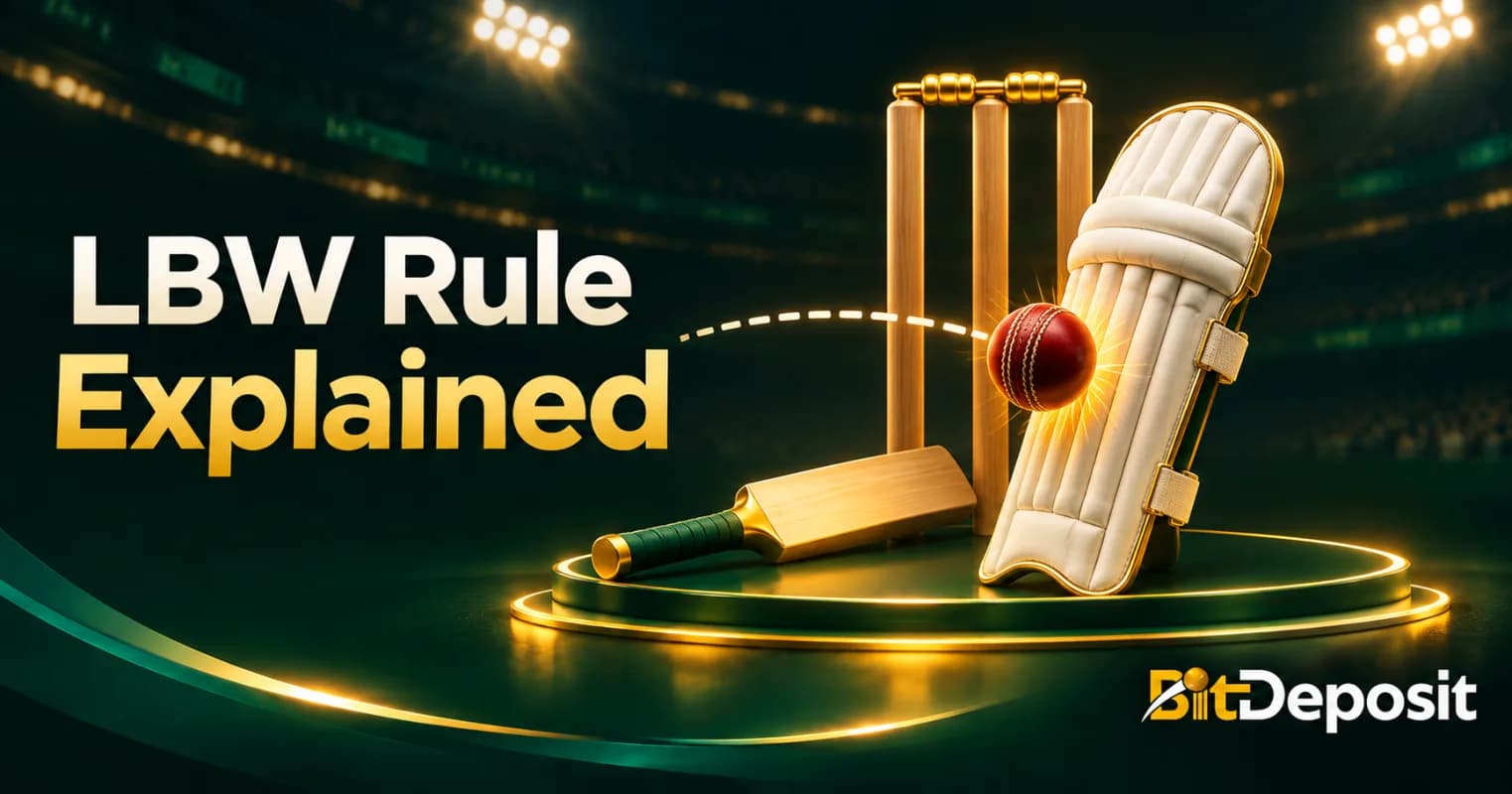
LBW Rule Explained: Leg Before Wicket in Cricket Made Simple
A beginner's guide to the LBW rule in cricket: the checks an umpire makes for leg before wicket, why pitching outside leg stump matters and how DRS reviews work.
Bitdeposit · 19 November 2026 · 8 min read
On this page
The LBW rule explained simply: a batter is out leg before wicket (LBW) when the ball hits the body or pad instead of the bat and would have gone on to hit the stumps, provided a set of conditions about the delivery is met. This guide covers each condition, the review system and common errors.
Key takeaways
- LBW stands for leg before wicket and is covered by Law 36 of the Laws of Cricket.
- A ball that pitches outside the line of leg stump can never be LBW.
- Impact outside the line of off stump is not out if the batter made a genuine attempt to play the ball with the bat.
- The Decision Review System (DRS) uses ball tracking to check pitching, impact and the path to the wicket.
What is the LBW rule in cricket?
The LBW rule is the law of cricket that stops a batter from using the body or pads, instead of the bat, to keep the ball off the stumps. If the ball would have hit the wicket and the other conditions are met, the batter is out.
LBW is set out in Law 36 of the Laws of Cricket, which are owned by Marylebone Cricket Club (MCC). Despite the name, the ball does not have to hit the leg: contact with any part of the batter's body or pads can count.
Three terms help when reading the rule. The wicket is the set of three stumps. Off stump is the stump on the side of the batter's bat, and leg stump is the one nearest the legs. "In line" means inside the strip between the two wickets.
How does the LBW rule work?
The LBW rule works as a chain of conditions, and the batter is out only if every one is satisfied. The conditions cover whether the delivery was a no-ball, where the ball pitched (bounced), whether it missed the bat, where it hit the batter and whether it would have gone on to hit the wicket.
A worked example with a right-handed batter facing three deliveries in one over:
- Ball 1 pitches in line with middle stump, hits the front pad in line and would have hit middle stump. Every condition is met, so the batter is out.
- Ball 2 pitches outside leg stump, turns and hits the pad in front of middle stump. The batter is not out, because of where the ball pitched.
- Ball 3 pitches outside off stump and hits the pad outside the line of off stump. If the batter played a shot, the batter is not out. If the batter padded the ball away with no shot, and the ball would have hit the stumps, the batter is out.
What are the LBW checks in order?
The LBW checks are five questions about the delivery, and a single "no" ends the appeal.
| Question | Out is possible if | Not out if |
|---|---|---|
| Was the delivery legal? | The ball was a fair delivery | The umpire called a no-ball |
| Where did the ball pitch? | In line with the stumps, outside off stump, or it did not bounce | Outside the line of leg stump |
| Did the ball hit the bat first? | The ball hit the body or pad first | The ball touched the bat, or the hand holding the bat, first |
| Where was the impact? | In line with the stumps, or outside off stump with no genuine shot offered | Outside off stump with a genuine shot, or outside leg stump |
| Would the ball have hit the wicket? | The ball was going on to hit the stumps or bails | The ball was missing, or going over the top |
Only the first point of impact counts. If the ball hits the bat and the pad at the same moment, the Laws treat it as hitting the bat first.
How does an umpire work through an LBW appeal?
An umpire works through an LBW appeal by answering each check in order and giving out only if every answer allows it:
- Wait for the fielding side to appeal, because an umpire does not give a batter out without one.
- Confirm that the delivery was legal and not a no-ball.
- Judge where the ball pitched, and rule out LBW if it pitched outside leg stump.
- Decide whether the ball touched the bat or glove before hitting the batter.
- Locate the point of first impact in relation to the line of the stumps.
- Assess whether the batter made a genuine attempt to play the ball, if the impact was outside off stump.
- Predict the path of the ball after impact, allowing for height, swing and spin.
- Signal out by raising a finger, or say "not out".
In matches that use the Decision Review System (DRS), either side can challenge the decision. Ball-tracking technology shows where the ball pitched, where it hit the batter and whether it would have hit the wicket.
"Umpire's call" is the result when ball tracking shows the impact or the wicket prediction to be marginal. The on-field decision then stands, whether it was out or not out, and the reviewing team keeps its review.
LBW also matters in betting. Method of dismissal markets ask how the next wicket will fall, usually with options of caught, bowled, LBW, run out, stumped or other. A wicket also moves live odds, usually against the batting side.
Common mistakes to avoid
- Forgetting where the ball pitched. A ball that pitches outside leg stump cannot be LBW, even if it was going on to hit middle stump.
- Assuming impact outside off stump is always safe. A batter who offers no genuine shot can be out even when struck outside the line of off stump.
- Ignoring the no-ball. A batter cannot be out LBW from a no-ball, however straight the delivery was.
Frequently asked questions
What does LBW mean in cricket?
LBW means leg before wicket, a way of getting a batter out in cricket. The batter is out when the ball hits the body or pad instead of the bat and would have gone on to hit the stumps, as long as the conditions in Law 36 are met and the fielding side appeals.
Can a batter be out LBW if the ball pitches outside leg stump?
No, a batter cannot be out LBW if the ball pitches outside the line of leg stump. This applies even if the ball then turns and would have hit the stumps. The rule exists in Law 36 and is one of the first things an umpire and the ball-tracking system check.
What is umpire's call in an LBW review?
Umpire's call is the outcome of a review when ball tracking shows a marginal result for the impact or the path to the wicket. The original on-field decision stands, whether it was out or not out. The team that asked for the review does not lose that review.
Can a batter be out LBW off a full toss?
Yes, a batter can be out LBW off a full toss, which is a ball that reaches the batter without bouncing. The pitching check does not apply, because the ball never pitched. The umpire assumes the ball would have continued on the path it was following at impact.
Does the batter have to play a shot to avoid LBW?
No, but playing a shot gives extra protection. If the batter makes a genuine attempt to play the ball and is hit outside the line of off stump, the batter is not out. If the impact is in line with the stumps, a shot makes no difference to the decision.
Play responsibly
An LBW decision can change a cricket match in one ball, and no rule knowledge makes a wicket predictable. If you bet on cricket, set a budget before the match, and never chase losses after a wicket falls. Betting is for adults only and is not legal everywhere, so check the law in your location. Help and advice are available from GambleAware.
Summary
- LBW is governed by Law 36: the ball must miss the bat, hit the batter and be going on to hit the wicket.
- A ball that pitches outside leg stump, or a no-ball, can never produce an LBW.
- DRS checks pitching, impact and wickets, and umpire's call leaves the on-field decision in place.
Dismissals are recorded on the scorecard, as shown in how to read a cricket scorecard, and the formats in which the rule applies are compared in T20 vs ODI vs Test cricket. Wicket markets are set out in cricket betting markets explained, and price moves after a wicket are covered in live betting explained.
18+ only. Play for fun, set your limits and take a break when it stops being fun.
Share this post